FMCSA's carrier census lists 5,254 active carriers based in the Philadelphia area — 4,720 with one to nine trucks, 416 operators running 10 to 49, and 109 with 50 or more — roughly 38,714 power units between them. 1
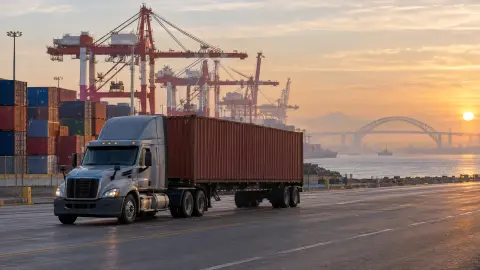
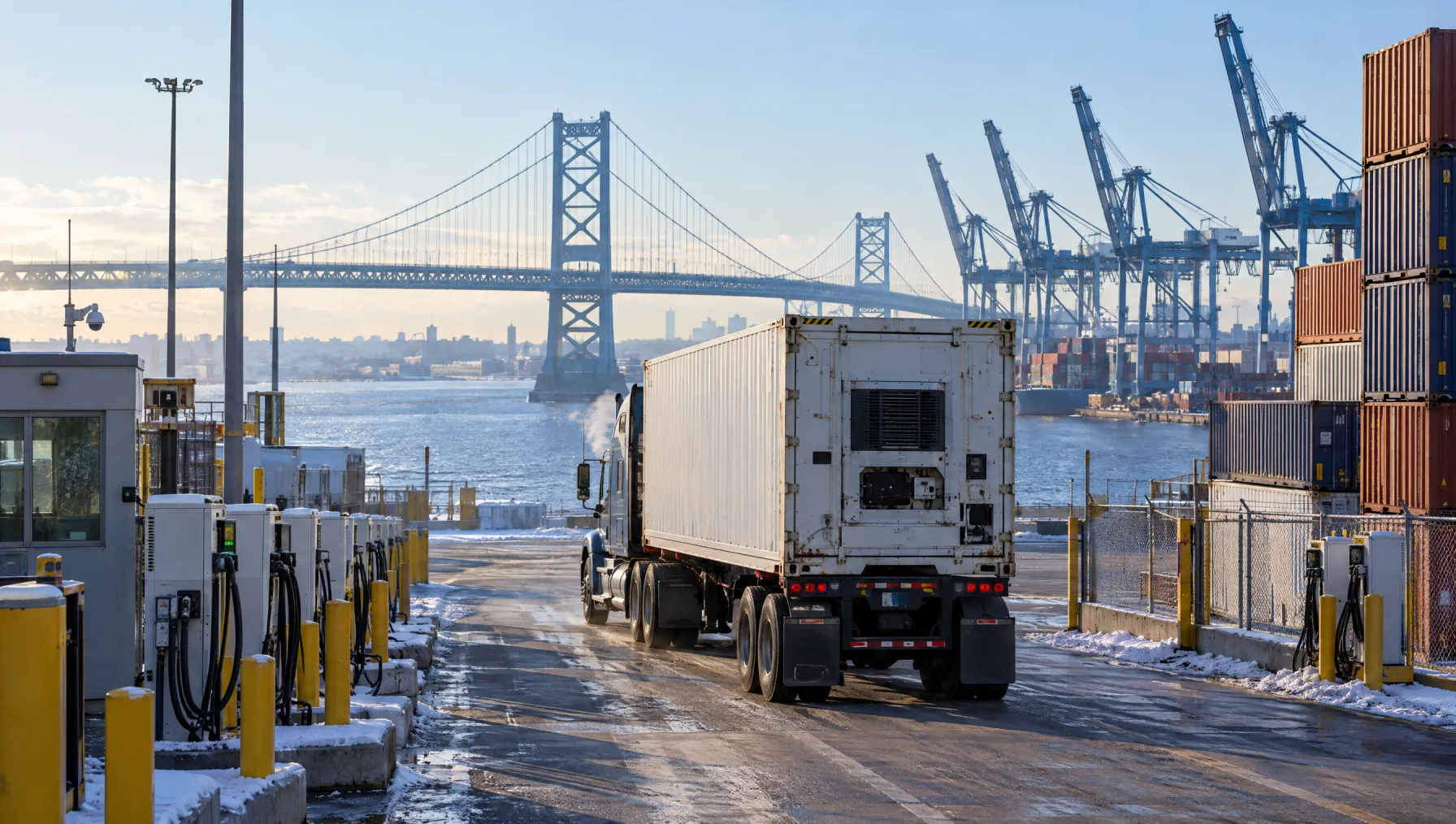
Philadelphia's trucking day starts at a refrigerated dock. Packer Avenue Marine Terminal in South Philadelphia handles containers, frozen meat, fruit, steel and paper, and PhilaPort says its terminals call on local carriers for as many as 1,500 reefer trucks a week. The first Chilean grapes of the 2024-25 season came off the ship there on December 18, 2024. From the gate, a driver is on I-95 or I-76 within minutes, and from there the work spreads north into Bucks County, west out the Turnpike toward King of Prussia, and south through Chester and Essington toward the refinery towns on the Delaware.
We recruit for carriers in this market the same way we do everywhere: you pay per driver we place, not per ad, not per month. In Philadelphia that matters because the hard part is not finding people with a CDL. It is finding the ones who will take your particular lane at your particular pay, and keeping the ones who do. We screen for that before a name reaches your inbox, and we bill when the driver actually starts.
In Philadelphia the driver is not asking how many miles. He is asking how many hours, which bridge, and who pays the toll.
Freight in Philadelphia: what moves, and where
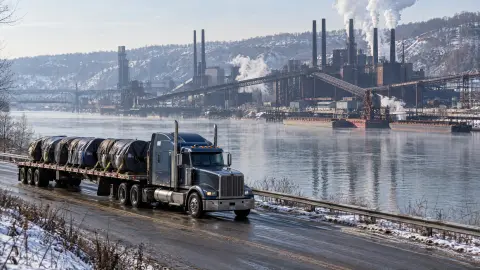
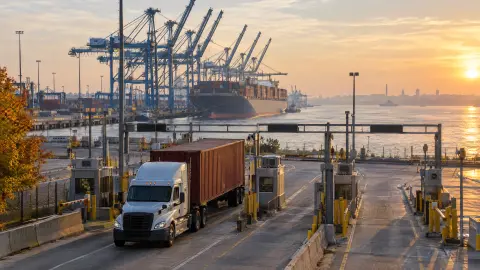
The freight here begins on the river. PhilaPort's Packer Avenue Marine Terminal covers 160 acres with six berths, 2,500 reefer plugs, a 157,000-square-foot refrigerated warehouse, an eight-lane inbound container gate and a separate breakbulk gate, with rail connections to CSX, Norfolk Southern and CN. PhilaPort lists containers, steel, frozen meat, fruit, heavy lift, project cargo and paper as the terminal's specialties, and a large share of the container work is cold. That is why Pennsylvania runs an annual overweight permit program for containerized refrigerated meat, allowing permitted six-axle combinations up to 107,500 pounds gross on specified highways in Philadelphia, Bucks, Chester, Delaware and Montgomery counties. A new PhilaPort Distribution Center, 201,621 square feet with 32 docks, sits one mile from Packer Avenue to hold frozen and temperature-controlled cargo. Up the river at 3601 North Delaware Avenue, Tioga Marine Terminal handles forest products, steel, containers and over-dimensional loads on 116 acres through an eight-lane truck gate. Down the river, Monroe Energy's 185,000-barrel-per-day Trainer Refinery straddles Trainer, Marcus Hook and Chester, about ten miles southwest of the city, producing jet fuel, gasoline, diesel, propane and home heating oil.
The second layer is rail and the Bucks County belt. Norfolk Southern's Morrisville intermodal terminal is actually at 48 Cabot Boulevard East in Langhorne, which puts a rail ramp in the middle of the lower Bucks fleet cluster: Bensalem, Langhorne, Bristol, Levittown, Morrisville and Croydon along US-1 and I-95. Since the flyover ramps opened in September 2018, I-95 has connected directly to the Pennsylvania Turnpike in Bristol Township, and the Turnpike Commission describes the result as making I-95 continuous through the Mid-Atlantic by way of the Delaware River Bridge. That interchange is one reason so many carriers sit in Northeast Philadelphia and Bensalem. In the FMCSA census the densest ZIP codes for carrier families in the metro are 19116 with 77 and 19115 with 51, both in Northeast Philadelphia, then Bensalem's 19020 with 31, Warminster's 18974 with 26 and 19154 in Northeast Philadelphia with 24. Of the 5,254 active registrations in the metro, 4,720 run one to nine trucks, 416 families run ten to forty-nine, and 109 run fifty or more.
The third layer is the western arc. I-476 runs nearly 17 miles from I-76 in West Conshohocken, Montgomery County, to I-95 in Ridley Township, Delaware County, past Norristown and the Delaware County suburbs, and PennDOT is resurfacing it under a $63.7 million project while it installs variable speed limits on the Delaware County stretch. The Turnpike Commission is widening its mainline east of Bensalem to three lanes each way toward the I-95 flyovers, with the next contract awarded in July 2026. A. Duie Pyle, an LTL carrier headquartered at 650 Westtown Road in West Chester, Chester County, lists service centers from Maine to Virginia and west into Ohio. Add King of Prussia, Exton, Pottstown, Hatfield and Souderton to the north and west and you have a metro where the freight is regional by nature: New York and North Jersey one day, Baltimore the next, and the port or a Bucks County DC in between.
- I-95
- The spine of the market from Chester through South Philadelphia, past the port gates, through Northeast Philly and into Bucks County. PennDOT is rebuilding 40-plus miles of it in sectors, with about eight miles between I-676 and Bridge Street under reconstruction now, so lane patterns change and drivers price the delay into their day.
- I-76 (Schuylkill Expressway)
- The east-west link from the Walt Whitman Bridge and the port to the Turnpike. PennDOT is resurfacing nearly five miles of it and repairing more than 20 bridges under a $41.3 million project, with lane closures between Walnut Street and University Avenue, and it is the road drivers ask about before they ask about pay.
- PA Turnpike (I-276) and the I-95 interchange
- Open Road Tolling at overhead gantries since January 5, 2025 east of Reading and on the Northeast Extension, billed as a per-mile base rate plus a per-gantry fee, with the Bristol Township flyovers tying I-95 to the Turnpike and the Delaware River Bridge into New Jersey. Toll cost is a real line item on a regional run.
- I-476 (Blue Route and Northeast Extension)
- PennDOT calls the southern piece the Blue Route: nearly 17 miles from I-76 in West Conshohocken to I-95 in Ridley Township. North of the Turnpike it becomes the Northeast Extension and passes through the Lehigh Tunnels near milepost A71, where Turnpike tunnel hazmat rules apply to placarded loads.
- US-1 (Roosevelt Boulevard)
- The surface route through Northeast Philadelphia toward Bensalem and Langhorne, through the ZIP codes where the FMCSA census puts the most carrier families in the metro. Slow and signal-heavy, and the reason local drivers measure a day in hours rather than miles.
- Delaware River bridges
- Walt Whitman, Ben Franklin, Betsy Ross and Commodore Barry are all DRPA bridges. Tolls are collected westbound into Pennsylvania, loads at 80,000 pounds or more need prior authorization, and the Commodore Barry is closed to oversize and overweight trucks until further notice during a $220 million rehabilitation slated to finish in early 2028.
Where the 10-plus-truck fleets sit, by ZIP: 19116 (77), 19115 (51), 19020 (31), 18974 (26), 19154 (24).
Hiring drivers in Philadelphia: what we actually see
The driver pool in Philadelphia lives in two places that do not overlap much: Northeast Philadelphia and lower Bucks County on one side, Delaware County and the western suburbs on the other. A driver in Somerton or Bustleton will take a job in Bensalem or Langhorne without a second thought and will turn down Essington or King of Prussia because the commute crosses the whole city on I-76 or the Boulevard. A driver in Chester or Folcroft thinks the same way in reverse. When we take an order here, the first question we ask the carrier is where the truck actually parks, because that single fact decides which half of the metro we can recruit from.
What drivers ask about is the structure of the day, not the headline rate. They want to know whether pay is hourly, daily or by the mile, because they know a Baltimore turn can eat most of a shift on a bad afternoon and the paid miles do not cover it. They ask whether tolls and the port's chassis and gate waits are on the clock. They ask whether the truck is assigned or slip-seated. Drivers with reefer and port experience, and anyone holding a current TWIC, are the quickest to place and the hardest to keep, because every dray and produce carrier in town wants them. Flatbed drivers for the steel and forest products coming through Tioga are the second fastest.
The seats that sit open are the ones with mileage pay on short regional lanes, slip-seat night work with no fixed schedule, and anything that asks a Northeast Philly driver to report to Delaware County before six in the morning. Carriers coming into this market from the Midwest or the South usually make the same mistake: they post the pay plan that works in Ohio or Georgia and wonder why the phone is quiet. We tell them before we start that a Philadelphia offer needs a time-based component, a clear policy on tolls and detention, and an honest description of the I-95 and I-76 construction a driver will sit in. Once those three things are in writing, the market fills.
What drivers in Philadelphia are paid
BLS puts the median annual wage for heavy and tractor-trailer truck drivers in the Philadelphia-Camden-Wilmington, PA-NJ-DE-MD metro area at $59,370, with a mean of $62,060 (Occupational Employment and Wage Statistics, May 2025).
The Bureau of Labor Statistics puts the 2025 annual median for heavy and tractor-trailer drivers in the Philadelphia-Camden-Wilmington metro at $59,370, with a mean of $62,060. The mean sitting above the median tells you the local distribution has a long upper tail: a group of drivers, in our read mostly in hourly port, tanker and LTL work, earning well above the midpoint, while a large share of the one-to-nine-truck fleets pay closer to or below the median. For a carrier, that median is the floor a driver will measure you against, not a target.
A regional run that works out to less than that, once unpaid toll time and gate waits are counted, will not hold a driver here. We suggest publishing the structure, not just a number: the hourly or daily rate, how tolls and detention are handled, the realistic weekly hours, and what the gross works out to over a normal week. Drivers here do that math quickly and respect a carrier that does it for them.
- $59,370
- median annual wage, Philadelphia-Camden-Wilmington metro
- $62,060
- mean annual wage, May 2025 (BLS OEWS 53-3032)
Rules that shape Philadelphia seats
PennDOT winter vehicle restriction tiers
In a declared winter event PennDOT, the Turnpike and PEMA apply tiered bans. Tier 1 pulls empty and lightly loaded tractors and trailers. Tier 2 adds commercial vehicles towing loaded tandem trailers without chains or Alternate Traction Devices. Tier 3 bans all loaded tandems and every other loaded commercial vehicle unless it carries full-coverage chains for at least two drive wheels or an approved ATD. Tier 4 is a complete commercial vehicle ban. Chains must be readily available, not installed. On February 22, 2026, Tier 4 went into effect on the entire Schuylkill Expressway, I-95, I-476, Turnpike I-95, I-276 and the Northeast Extension. source ↗
Pennsylvania diesel idling limit (Act 124)
A diesel vehicle with a gross weight of 10,001 pounds or more engaged in commerce may idle no more than five minutes in any continuous 60-minute period. An attended truck waiting to load, unload, weigh or be sampled gets 15 minutes. The law binds the driver, the owner, and the owner or operator of the location where the truck loads, unloads or parks, and sites that load or unload trucks or offer 15 or more truck parking spaces must post a permanent no-idling sign. A summary offense carries a fine of $150 to $300. source ↗
Port of Philadelphia overweight container permits
Pennsylvania issues annual permits for containerized refrigerated meat allowing six-axle combinations with a three-axle tractor up to 107,500 pounds gross on specified highways in Philadelphia, Bucks, Chester, Delaware and Montgomery counties, with no axle over 21,000 pounds; the tractor needs an engine retarder when it leaves the five counties. A separate program allows 90,000 pounds gross for sealed international containers. Outside those programs Title 75 Section 4941 caps gross weight at 80,000 pounds. The permit must be in the truck. source ↗
TWIC for port terminal access
Unescorted access to the secure areas of Packer Avenue, Tioga and the other MTSA-regulated marine terminals requires a Transportation Worker Identification Credential from TSA. The card costs $124 for a new applicant, or $93 at the reduced rate, is valid for five years, and TSA recommends enrolling at least 60 days before a driver needs it. source ↗
DRPA bridge weight authorization and Commodore Barry restriction
Any load at 80,000 pounds or more must be authorized through the DRPA online truck permit system before crossing the Walt Whitman, Ben Franklin, Betsy Ross or Commodore Barry bridges, and oversize loads at or under 80,000 pounds need a police escort instead. Since October 13, 2025, all oversize and overweight trucks are barred from the Commodore Barry Bridge in both directions until further notice while a $220 million rehabilitation, slated for completion in early 2028, is under way. source ↗
PA Turnpike tunnel hazmat restrictions
Placarded loads leaving the metro north on the Northeast Extension pass through the Lehigh Tunnels between mileposts A70 and A72, and the Turnpike bars all explosives, poison gas, dangerous-when-wet, organic peroxide, inhalation-hazard poison and radioactive materials from its five tunnels, with flammable gas, flammable liquid, flammable solid, spontaneously combustible, oxidizer, other poison and corrosive materials prohibited in bulk packaging. Combustible liquids such as fuel oil in bulk are permitted. Tank drivers need the detour planned before dispatch. source ↗
The Philadelphia calendar
The Philadelphia calendar runs on fruit and weather. Chilean grapes reach Packer Avenue in December; the first of the 2024-25 season came off the ship on December 18, 2024, and in 2023 more than 200,000 tons of Chilean grapes moved through the Greater Philadelphia terminals. That fruit keeps reefer drayage busy through the winter into spring, which is exactly when PennDOT winter tiers, nor'easters and ice on the Schuylkill Expressway take trucks off the road.
That overlap is the tightest hiring window of the year for port and reefer carriers. Summer is steadier, with construction season on I-95 and I-76 slowing every lane and pushing drivers toward jobs with time-based pay. In our experience fall brings retail inbound to the Bucks County and King of Prussia DCs and a short window where experienced drivers shop for a change before the holidays.
Supply loosens in January and February, when small fleets park trucks and their drivers look for a steady hourly seat.
How pay-per-driver works for a Philadelphia carrier
An intake call maps your lanes, equipment, pay and home time for Philadelphia; if we can't guarantee you enough driver volume, we say so on that call. Our recruiters interview every driver by phone and verify CDL, endorsements, experience and work history against your requirements, then send complete submission packets through Onboard, our own placement platform. You pay per placed driver — half when the driver starts, half after the first 14 days — and recruiting for Philadelphia runs from our Mundelein, IL office, 770 miles away. The model in full is on Pay Per Driver; why the first 48 hours decide most hires is on speed to hire.
Who this fits in Philadelphia — and who it doesn't
The census counts 416 operators running 10 to 49 trucks in the Philadelphia area and 109 with 50 or more.
This works for the 416 carrier families in the ten-to-forty-nine truck band and most of the 109 at fifty trucks and up: port drayage and reefer carriers in South Philadelphia, regional dry van and LTL fleets in Bensalem, Langhorne and Northeast Philadelphia, flatbed and steel haulers working Tioga, tank carriers serving the Trainer and Marcus Hook refinery belt, and dedicated DC fleets in King of Prussia, Exton and Hatfield. The common thread is that the carrier can name the lane, state pay by the hour or the day where the lane demands it, and let us describe the real schedule to a driver. Fleets in the one-to-nine band can work too, if they have a parked truck, a start date and a pay plan in writing.
Who we turn down: We turn down carriers that want to recruit Philadelphia drivers on a per-mile rate for New York or Baltimore turns and will not discuss how tolls, gate time and the afternoon on I-95 are paid. We turn down anyone who asks us to leave the construction, the slip-seating or the night start out of the job description. We also decline fleets without a truck ready in the metro, because a driver in Bustleton will not wait a month for a seat, and we do not promise drivers we cannot deliver.
How we think about drivers who stay: why drivers quit, and how to fix each reason. Selling to trucking companies rather than hiring drivers? That's a different service — Marketing for Trucking.
Our numbers
No third party audited these. They're our own operating numbers — the claims we make publicly about our own shop, and the standard you should hold us to on a call.
- 100+
- drivers our operation places per month
- 3,000+
- lifetime CDL hires
- 50+
- carrier partners
- 24 hrs
- to first drivers for a new carrier
More carrier feedback, in the carriers' own words: results.
Questions Philadelphia carriers ask us
Staffing and recruiting are not the same purchase — ask any agency these, then compare who does the work and when the money changes hands.
What does CDL Agency charge to recruit a driver for a Bensalem or Langhorne fleet, and when is it due?
We charge a flat fee per driver we place. There is no retainer, no job-board spend, no monthly subscription. You pay half when the driver starts and the other half after the retention window we agree to in writing. If the driver does not show up on day one you owe nothing. If the driver leaves inside the window we replace at no added cost or you keep the balance. The fee is the same for a reefer dray out of Packer Avenue, a regional van run out of Bensalem or a tank seat in Trainer, and you know the number before we start.
Who actually works a Philadelphia carrier's seats, and where do those recruiters sit?
We do not have an office, a yard or recruiters in Philadelphia. Our nearest office is our headquarters at 1280 Townline Road in Mundelein, Illinois, about 770 miles away, and we also work from Romeoville, Illinois, Lancaster, Texas and North Miami, Florida. Recruiting for Philadelphia carriers happens by phone, text and video from those offices. We know the market from the research on this page and from working carrier orders, not from a desk on Roosevelt Boulevard, and we say that plainly to every driver and carrier.
Do drivers who live in Northeast Philadelphia and Bucks County want regional, OTR or local work?
Mostly regional with a home-every-night or every-other-night pattern. The Northeast Philly and lower Bucks pool sits on I-95 and the Turnpike interchange at Bristol Township, so a New York, North Jersey or Baltimore turn fits the geography and the driver's expectation. True OTR is a small share here; the drivers who want it have usually already left for a national fleet. Local work fills when it is hourly and the yard is on the driver's side of the city. The slowest seats are mileage-pay regional runs and anything that asks a Somerton driver to report to Delaware County before dawn.
What is intermodal and port drayage like out of Packer Avenue and the Norfolk Southern ramp in Langhorne?
Packer Avenue runs an eight-lane inbound container gate, a six-lane outbound gate and a separate breakbulk gate, with chassis from the Trac Intermodal and DCLI pools, and much of the box traffic is frozen meat and fruit, so the day is built around reefer plugs, appointment windows and whoever is ahead of you at the gate. The Norfolk Southern Morrisville terminal is at 48 Cabot Boulevard East in Langhorne, right in the Bucks County fleet cluster, so a dray driver can live in Levittown and work both the port and the ramp. Drivers price gate and chassis time in. A carrier that pays by the hour or pays detention from the first minute fills these seats; one that pays by the move struggles.
What paperwork does a driver need to work the Philadelphia port terminals?
A TWIC card from TSA for unescorted access inside the secure areas of Packer Avenue, Tioga and the other MTSA-regulated terminals; it costs $124 new, lasts five years, and TSA wants applications in 60 days ahead, so we ask about it on the first call. Carriers hauling containerized refrigerated meat under the heavy program need the annual Pennsylvania overweight permit in the cab, since those six-axle combinations can gross up to 107,500 pounds on specified highways in the five counties. Any load at 80,000 pounds or more crossing a DRPA bridge needs prior authorization through the DRPA online permit system. There is no customs border here.
How does night, yard-shuttle and dedicated DC work compare with over-the-road for Philadelphia drivers?
Night and yard work is in demand when it is predictable. A fixed-shift yard shuttle at a King of Prussia or Hatfield distribution center, or a night dray between the port and a cold warehouse near Packer Avenue, fills quickly with drivers who want to be home by morning and off the Schuylkill Expressway at rush hour. What does not fill is slip-seat night work with a start time that moves every day. Dedicated DC runs that leave Bucks County, hit one customer in North Jersey and return the same day are the easiest seats we recruit here. Over-the-road draws a thinner pool here.
Drivers in Philadelphia: browse current CDL-A jobs or get matched to a carrier — free for drivers.
Sources
- PhilaPort, Packer Avenue Marine Terminal facility overview
- PhilaPort, Tioga Marine Terminal facility overview
- PhilaPort, Truck Access: 1,500 reefer trucks a week and overweight container permit programs
- PhilaPort, First Chilean grapes arrive at Packer Avenue, December 19, 2024
- PhilaPort Distribution Center, one mile from Packer Avenue
- PennDOT 95Revive, I-95 reconstruction program overview
- PA Turnpike, I-95 Interchange Project (Bristol Township flyovers opened September 2018)
- PA Turnpike, Open Road Tolling changes effective January 5, 2025
- PA Turnpike, Hazardous Materials Tunnel Restrictions
- PA Turnpike, Lehigh Tunnel travel advisory (Northeast Extension, mileposts A70.2 to A71.9)
- PennDOT, winter vehicle restrictions update, February 22, 2026
- 511PA, Inclement Winter Weather Travel Restriction and Ban Framework, Appendix F (PDF)
- PA DEP, Diesel-Powered Motor Vehicle Idling Act (Act 124) fact sheet
- PA DEP, Act 124 frequently asked questions (attended idling, location liability, signs, fines)
- Pennsylvania Title 75 Section 4941, maximum gross weight
- DRPA, truck permits, overweight authorization and westbound toll collection
- DRPA, travel advisories (Commodore Barry oversize/overweight restriction from October 13, 2025)
- DRPA, Commodore Barry Bridge
- DRPA, Walt Whitman Bridge
- Norfolk Southern Intermodal Rules Circular, terminal directory (Morrisville, PA at 48 Cabot Boulevard East, Langhorne)
- Monroe Energy, Trainer Refinery history and today
- A. Duie Pyle, corporate headquarters and service center locations
- PennDOT District 6, I-476 improvement projects, West Conshohocken to Ridley Township (nearly 17 miles)
- PennDOT District 6, I-476 Variable Speed Limits project (local name Blue Route)
- PennDOT District 6, I-76 Schuylkill Expressway resurfacing and bridge repair, October 2025
- TSA, Transportation Worker Identification Credential
- National Weather Service, Mount Holly / Philadelphia forecast office
1 FMCSA Company Census (2026-09-26): active carriers based in Philadelphia, Bensalem, Langhorne, Bristol, Levittown, Morrisville, Croydon, Conshohocken, King of Prussia, Norristown, Chester, Essington, Folcroft, Warminster, Hatfield, Souderton, Pottstown, Exton; MCS-150 filed in the last 24 months; 1–20,000 trucks; fewer than 10 buses. 10+ truck counts merge registrations sharing an address or D-U-N-S number. Totals and the 1–9 band count active USDOT registrations; fleet sizes are self-reported on the MCS-150, so read them as a scale, not a headcount.
Wages: U.S. Bureau of Labor Statistics, OEWS May 2025, occupation 53-3032, series OEUM003798000000053303213 (median) and OEUM003798000000053303204 (mean).
Written by
Andrius Pletniovas — Founder, CDL Agency
Andrius Pletniovas (Andrius Digital) is the founder of CDL Agency, a truck-driver recruiting and marketing company that has placed 3,000+ CDL drivers for 50+ carriers across the U.S. He writes about driver recruiting, retention, and the trucking market from running the agency every day.
More about Andrius →Official personal website →