FMCSA's carrier census lists 7,230 active carriers based in the Denver area — 6,591 with one to nine trucks, 495 operators running 10 to 49, and 137 with 50 or more — roughly 85,704 power units between them. 1
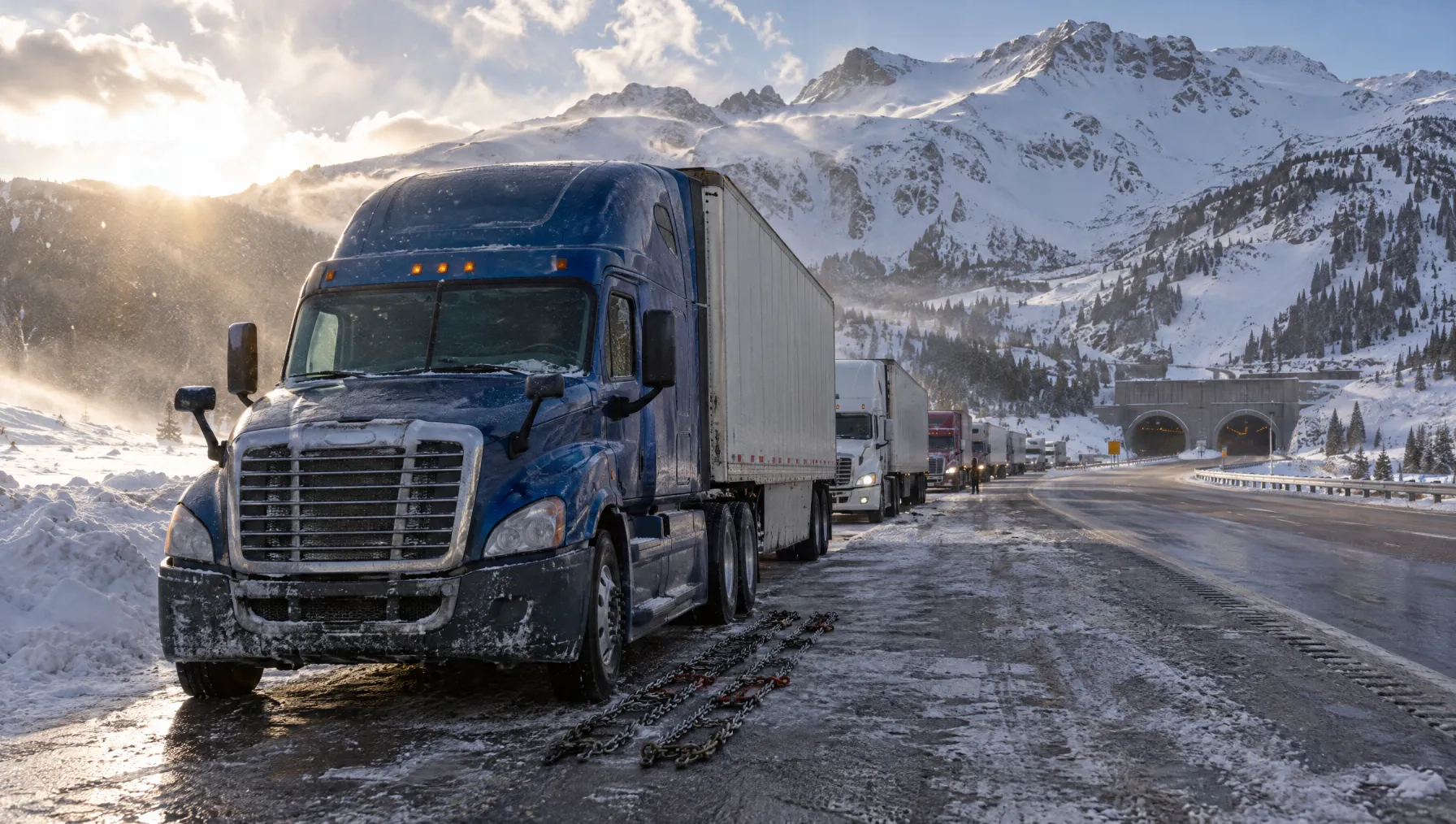
Every long load out of Denver has to clear something. Westbound it is the Eisenhower-Johnson Memorial Tunnel at 11,112 feet, where hazmat gets turned off onto Loveland Pass and clearance is 13 feet 11 inches. North it is I-25 through Weld County, still being widened between Mead and Berthoud. East it is I-70 or I-76 across plains where wind, not grade, is the problem; the National Weather Service logged gusts of 60 to 80 mph as common on the northeast plains in the April 2024 windstorm, with 84 mph on I-76 at Sterling. Dispatchers here plan around geography, and drivers know that geography before they call.
Pay-per-driver recruiting means we are paid for a seated driver, not for ad spend. For a Front Range carrier that moves the cost of a bad hire onto us. We screen for what ends a Denver placement early: whether the driver has chained on a grade, whether they will run the mountain corridor from September to May, and whether your home-time promise survives a Vail Pass closure. If the driver never starts, you owe nothing.
In Denver the recruiting call starts at the tunnel: a driver wants to know what happens to his week when Loveland Pass shuts before he asks what the job pays.
Freight in Denver: what moves, and where
Denver is an inland distribution point for the Mountain West, and nothing floats here. Freight comes by rail and highway and leaves the same way. The rail anchor for truckers is Union Pacific's Denver Intermodal Terminal at 4085 York Street in ZIP 80216, handling container and trailer on flatcar around the clock with precision gating technology at the entrance. That ZIP is the densest fleet address in the FMCSA census for this metro, with 53 carrier families of ten or more trucks. Beside it, CDOT's Central 70 project rebuilt ten miles of I-70 between Brighton Boulevard and Chambers Road, lowered it between Brighton and Colorado boulevards and added an express lane each way, finishing in July 2023.
The second cluster sits north and east. Commerce City in 80022 holds 47 fleet families, Thornton in 80229 holds 26 and Aurora in 80011 holds 32. Commerce City and Thornton feed I-25 and US 85 into Weld County, where the food freight is. JBS USA is headquartered at 1770 Promontory Circle in Greeley, calls itself the number one beef producer in the United States, runs a Greeley beef plant with more than 3,800 team members and announced in February 2025 a 50 million dollar investment there, including a new distribution center. Leprino Foods runs a Greeley plant making mozzarella, native whey protein and micellar casein, with headquarters on West 38th Avenue in Denver and a second Colorado plant in Fort Morgan. Greeley's 80631 ZIP has 30 fleet families, which is why so much Front Range work is reefer, livestock and dairy ingredients. CDOT is rebuilding I-25 from CO 66 in Mead to CO 56 in Berthoud with an express lane each way, due in 2028, the last gap before I-25 runs more than two lanes each way from Denver to Fort Collins.
Aurora's fleets sit on the east side near I-70 and E-470, the all-electronic toll loop that serves Denver International Airport and links five municipalities across three counties. West is the hard part. CDOT's posted count for the Eisenhower-Johnson tunnel was 12,699,830 vehicles in 2021, the latest year with an annual total on its page, and the peak posted year was 2018 at 13,436,488. The approaches stay under construction: Floyd Hill between mile points 241 and 248 runs to 2029, and the West Vail Pass auxiliary lanes run through December 2026. Colorado also allows 85,000 pounds gross on non-interstate highways against 80,000 on the interstate, so ag and aggregate work on US 85 runs heavier than interstate-legal.
- I-70 West (Mountain Corridor)
- The one interstate west. Chains must be carried September 1 to May 31 from Morrison to Dotsero, Floyd Hill construction runs to 2029, and no hazmat or anything over 13 feet 11 inches goes through the tunnel.
- I-70 East and Central 70
- Rebuilt and lowered through the rail-yard belt since July 2023, with an express lane each way. The daily road for 80216 drayage and for Aurora fleets heading toward Kansas.
- I-25 North to Fort Collins and Greeley
- The Front Range spine from Thornton into Weld County. Lane shifts between Mead and Berthoud until 2028, with the Greeley food plants sitting just east of it.
- I-76 Northeast
- Leaves the north metro for Nebraska across 184 miles of Colorado plains. Flat and exposed; the April 2024 windstorm put 84 mph on I-76 at Sterling, and drivers who run it ask about wind more than snow.
- E-470
- Cashless toll loop on the east side serving Denver International Airport and linking Aurora to Thornton without I-25 congestion. Tolls scale with axle count, so who pays comes up in the first call.
- US 85 to Greeley
- The older truck route north from Commerce City and Brighton into Weld County, carrying Colorado's 85,000-pound non-interstate gross limit that ag and aggregate loads use.
Where the 10-plus-truck fleets sit, by ZIP: 80216 (53), 80022 (47), 80011 (32), 80631 (30), 80229 (26).
Hiring drivers in Denver: what we actually see
Denver recruiting is two markets with one phone number. Drivers who want to be home nightly work the Front Range: drayage off the York Street ramp, reefer between Greeley and the Denver distribution belt, food distribution, LTL and dedicated retail. Those seats fill fast when start time, equipment and pay are posted honestly, and slowly when a carrier calls a Grand Junction turn local. Drivers who want miles leave the state through the tunnel or across the plains, and that carrier competes head-on with national fleets. The chain question comes before the pay question: who installs, who pays, and what the week looks like when CDOT shuts I-70.
Commute geography is long, not wide. The metro stretches north to south along I-25 and the fleets sit in bands: Commerce City, Thornton and Brighton on the north side, Aurora on the east, Greeley and Fort Collins up in Weld and Larimer counties. A driver living in Greeley will not keep a five in the morning start in Englewood, and a Lakewood driver will not run to Commerce City daily for a yard that is 20 minutes from Northglenn applicants. We screen on where the driver lives first, because a hire who fits the job but not the drive quits in week six.
What carriers get wrong here is the mountain filter. A Front Range dedicated route does not need a driver who has chained on a grade in the dark, and screening every applicant for mountain time throws away good local drivers. The reverse mistake is worse: a flat-land driver with a new CDL on a winter run to Grand Junction because the seat was open. We ask mountain and tanker candidates about actual chain-ups, engine brake use and Loveland Pass, and local candidates about start times, dock work and customers. Slow seats here are hazmat tankers routed over the pass and night mountain runs; fast seats are home-daily reefer, drayage and dedicated with a stated weekly minimum.
What drivers in Denver are paid
BLS puts the median annual wage for heavy and tractor-trailer truck drivers in the Denver-Aurora-Centennial, CO metro area at $63,900, with a mean of $66,130 (Occupational Employment and Wage Statistics, May 2025).
The Bureau of Labor Statistics put the 2025 median for heavy and tractor-trailer drivers in the Denver-Aurora-Centennial metro at 63,900 dollars and the mean at 66,130. The gap is the shape of the market: mountain OTR, tanker and specialized pay pull the average up while most Front Range seats cluster near the median. A home-daily Front Range job paying around the median sits in the middle of what drivers here see, not the bottom.
A mountain OTR or hazmat seat needs to clear the mean to pull a driver from a national fleet on the same lanes. Publish a weekly or annual floor, not cents per mile alone, plus what drivers price here: chain-up pay, layover when I-70 closes, detention at the Greeley plants and who covers E-470 tolls.
- $63,900
- median annual wage, Denver-Aurora-Centennial metro
- $66,130
- mean annual wage, May 2025 (BLS OEWS 53-3032)
Rules that shape Denver seats
I-70 must-carry chain law, Dotsero to Morrison, September 1 to May 31
Colorado requires commercial vehicles on I-70 between milepost 133 at Dotsero and milepost 259 at Morrison to carry chains from September 1 through May 31. SB24-100, effective August 7, 2024, extended the must-carry rule for vehicles over 16,000 pounds to I-70 west of milepost 259 plus US 40, 50, 160, 285 and 550 and Colorado 9, which CDOT counts as more than 1,400 centerline miles with 130 chain stations. When the chain law is in effect, four drive wheels must be chained. CDOT lists a 500 dollar fine for not carrying chains and up to 1,000 dollars plus surcharge for blocking the road. source ↗
No hazmat through the Eisenhower-Johnson Memorial Tunnel
Trucks carrying hazardous materials may not use the tunnel and must take US 6 over Loveland Pass. When weather closes the pass, CDOT escorts waiting hazmat loads through, usually at the top of the hour, in closures of about 15 minutes. Clearance is 13 feet 11 inches and the tunnel sits at 11,112 feet. source ↗
Colorado weight limits: 80,000 on the interstate, 85,000 off it
FHWA's state table lists Colorado at 80,000 pounds gross and 36,000 on a tandem on the interstate, and 85,000 gross with 40,000 on a tandem on non-interstate highways under the state bridge formula, with 20,000 on a single axle. Drivers moving between US 85 ag work and interstate lanes need to know which limit applies. source ↗
E-470 is cashless; plates get billed and axles set the rate
The E-470 Public Highway Authority collects every toll electronically through ExpressToll, reading sticker tags and license plates at highway speed, with no booths and no cash. Tolls rise with axle count, and trucks over 80,000 pounds or over 14 feet tall need an E-470 oversize permit. A carrier whose drivers use the east loop to reach Denver International Airport or the Aurora yards should decide in writing whether the tag is on the truck or the driver. source ↗
The Denver calendar
The hiring calendar here is set by statute more than by retail. 9 inches in an average season. 3, so the worst mountain weeks land at both ends of winter.
OTR drivers who had a hard season start calling in late winter for Front Range seats, which is when local carriers should hire. Food freight out of Greeley does not follow a retail calendar, so reefer demand stays steady. Hazmat carriers lose drivers when Loveland Pass closes and the week becomes escort waits, so we recruit tanker seats hardest in spring.
How pay-per-driver works for a Denver carrier
An intake call maps your lanes, equipment, pay and home time for Denver; if we can't guarantee you enough driver volume, we say so on that call. Our recruiters interview every driver by phone and verify CDL, endorsements, experience and work history against your requirements, then send complete submission packets through Onboard, our own placement platform. You pay per placed driver — half when the driver starts, half after the first 14 days — and recruiting for Denver runs from our Lancaster, TX office, 800 miles away. The model in full is on Pay Per Driver; why the first 48 hours decide most hires is on speed to hire.
Who this fits in Denver — and who it doesn't
The census counts 495 operators running 10 to 49 trucks in the Denver area and 137 with 50 or more.
This works for the 495 Denver-area carrier families running 10 to 49 trucks and the 137 running 50 or more, especially those based in Commerce City, Aurora, Thornton and Greeley with Front Range dedicated, drayage off the York Street ramp, reefer between the Weld County plants and Denver, LTL, food distribution, aggregate and energy support on US 85, or regional West lanes through the tunnel. These carriers can give a straight answer on chain policy, run equipment that survives a winter screen and state a weekly floor. They lose drivers to national fleets on pay transparency, not culture, and that is fixable.
Who we turn down: We turn down most of the 6,591 one-to-nine truck registrations here, not because they are bad operators but because a three-truck fleet usually cannot carry a recruiting fee or guarantee a weekly floor. We also decline carriers that want a Grand Junction turn advertised as local, carriers that will not put their I-70 chain policy in writing, carriers selling a lease-purchase as a company job, and anyone who wants us to tell drivers that Loveland Pass routing will not affect their week.
How we think about drivers who stay: why drivers quit, and how to fix each reason. Selling to trucking companies rather than hiring drivers? That's a different service — Marketing for Trucking.
Our numbers
No third party audited these. They're our own operating numbers — the claims we make publicly about our own shop, and the standard you should hold us to on a call.
- 100+
- drivers our operation places per month
- 3,000+
- lifetime CDL hires
- 50+
- carrier partners
- 24 hrs
- to first drivers for a new carrier
More carrier feedback, in the carriers' own words: results.
Questions Denver carriers ask us
Staffing and recruiting are not the same purchase — ask any agency these, then compare who does the work and when the money changes hands.
What does it cost a Commerce City fleet to hire a driver through you, and when do we pay?
You pay per placed driver, not for ads or applicant volume. The fee is split: half when the driver starts and the balance after the driver has stayed through the retention period we agree on before we begin. If a candidate never shows for orientation at your Commerce City yard, you owe nothing. We price by seat type, so a Front Range home-daily reefer job and a mountain OTR tanker seat cost differently, and we quote it in writing before the first call.
Where are your recruiters, and will anyone be at our Aurora terminal?
We have no office in Colorado. Our nearest office is Lancaster, Texas, in the Dallas area, about 800 miles from Denver, and our headquarters is in Mundelein, Illinois. Denver recruiting runs by phone, text and video, which is how Front Range drivers already shop for jobs. Nobody from us will stand in your Aurora break room, and we will not claim otherwise. We learn your yard, customers, start times and chain policy well enough to describe them to a driver in Thornton as your dispatcher would.
Can you recruit Spanish-speaking drivers for our Greeley reefer runs?
Yes. We recruit in Spanish and English, and the first call, the application walk-through and orientation reminders happen in the language the driver prefers. In the Greeley, Commerce City and Aurora corridors a carrier that advertises only in English leaves much of the local pool untouched, and the drivers who do apply then hit an English-only orientation packet and quit before day one. We ask up front whether your dispatch and paperwork work in Spanish and say so in the ad. If dispatch is English-only, we screen for radio-comfortable English.
How many Denver carriers are competing for the same driver who wants a home-daily I-25 run?
The FMCSA census as of September 26, 2026, shows 7,230 active carrier registrations based in the Denver metro, from Castle Rock to Greeley, running 85,704 trucks: 6,591 with one to nine trucks, 495 families with 10 to 49 and 137 with 50 or more. A driver in Thornton who wants a home-daily seat has hundreds of plausible employers within a 30-minute drive and compares them on a phone in one evening. Vague ads lose. A posting that states the weekly floor, the start time, the customers and the chain policy wins.
We run 22 trucks out of Thornton. Does pay-per-driver recruiting work at our size, or only for 50-truck fleets?
It works well at your size. A 10 to 49 truck fleet in Thornton usually has one person doing safety, recruiting and dispatch, and that person cannot return calls at seven in the evening when a Greeley driver is free to talk. We do that part. The 137 families with 50 or more trucks often have an in-house recruiter, and we take the hard seats like mountain OTR or hazmat over Loveland Pass. An empty truck on an I-25 dedicated run costs more per week than a placement fee, and you pay only when the seat is filled.
Should we lease on owner-operators for the I-70 mountain lanes or hire company drivers?
For the mountain and western OTR lanes, owner-operators are often the better fit. They own chains, know the tunnel and Floyd Hill and price their own winter downtime. Their questions are fuel surcharge, who pays E-470 tolls and whether you run 85,000-pound non-interstate loads on US 85. Company drivers fit the Front Range work: drayage off York Street, Greeley reefer, dedicated retail. They want a weekly floor, a stated start time and a truck with a working engine brake. Decide which model a seat is before we advertise it; a lease-purchase pitched as a company job loses a Denver driver's trust fast.
Drivers in Denver: browse current CDL-A jobs or get matched to a carrier — free for drivers.
Sources
- CDOT: Eisenhower-Johnson Memorial Tunnel overview (11,112 ft elevation, 13 ft 11 in clearance)
- CDOT: EJMT metering page (hazmat prohibited, Loveland Pass routing, 15-minute escort closures)
- CDOT: EJMT traffic counts (annual total 2021: 12,699,830; 2018: 13,436,488)
- Colorado General Assembly: HB19-1207 (I-70 traction equipment carried MP 133 Dotsero to MP 259 Morrison, Sept 1 to May 31)
- Colorado General Assembly: SB24-100 (CMV must-carry extended to I-70 west of MP 259, US 40, 50, 160, 285, 550 and CO 9; vehicles over 16,000 lb; effective Aug 7, 2024)
- Colorado General Assembly: Commercial Vehicle Chain Law summary (four drive wheels chained when chain law in effect)
- CDOT news, Oct 2025: Colorado's Must Carry Law (1,400 centerline miles, 130 chain stations, $500 and up to $1,000 plus surcharge fines)
- CDOT news, Nov 2025: Traction Law in effect Sept 1 through May 31 on I-70 between Dotsero and Morrison
- FHWA: State truck size and weight limits, Appendix A (Colorado 80,000 interstate / 85,000 non-interstate)
- Union Pacific: Denver Intermodal Terminal, 4085 York Street, Denver, CO 80216 (COFC, TOFC, Precision Gating Technology, 24/7)
- CDOT: Central 70 Project (10 miles, Brighton Blvd to Chambers Rd, lowered Brighton to Colorado Blvd, one express lane each way, complete July 2023)
- CDOT: I-70 Floyd Hill Project (MP 241 to 248, complete 2029)
- CDOT: I-70 Mountain Corridor projects (West Vail Pass auxiliary lanes, Aug 2021 to Dec 2026)
- CDOT: North I-25, CO 66 Mead to CO 56 Berthoud express lanes (complete 2028)
- E-470 Public Highway Authority homepage (ExpressToll tags and plates, five municipalities and three counties, DEN exit 28A)
- E-470: How Tolling Works (no booths, no coins, all-electronic)
- E-470: Driving FAQs (no cash, axle-based rates, oversize permit over 80,000 lb or 14 ft)
- NWS Boulder: Denver fall and winter statistics (56.9 in average, first snow Oct 19, last Apr 28)
- NWS Boulder: Denver seasonal snowfall by month (March 11.4 in, November 7.3 in)
- NWS Boulder: April 2024 windstorm (60 to 80 mph gusts common on the northeast plains, 84 mph at I-76 Sterling)
- JBS Foods USA: headquarters 1770 Promontory Circle, Greeley, CO; #1 beef producer in the USA
- JBS Foods, Feb 4, 2025: $200 million beef investments, $50 million in Greeley including a new distribution center; 3,800+ team members
- Leprino Foods locations: Denver headquarters 1830 W. 38th Ave, Greeley plant (mozzarella, native whey protein, micellar casein), Fort Morgan plant
- FHWA Interstate route log (I-25, I-70, I-76 states served; I-76 Colorado 184.00 miles)
- BLS OEWS metro tables, Denver-Aurora-Centennial (area 19740), May 2025
1 FMCSA Company Census (2026-09-26): active carriers based in Denver, Aurora, Commerce City, Henderson, Brighton, Thornton, Northglenn, Westminster, Arvada, Golden, Lakewood, Englewood, Littleton, Centennial, Parker, Castle Rock, Broomfield, Longmont, Loveland, Fort Collins, Greeley; MCS-150 filed in the last 24 months; 1–20,000 trucks; fewer than 10 buses. 10+ truck counts merge registrations sharing an address or D-U-N-S number. Totals and the 1–9 band count active USDOT registrations; fleet sizes are self-reported on the MCS-150, so read them as a scale, not a headcount.
Wages: U.S. Bureau of Labor Statistics, OEWS May 2025, occupation 53-3032, series OEUM001974000000053303213 (median) and OEUM001974000000053303204 (mean).
Written by
Andrius Pletniovas — Founder, CDL Agency
Andrius Pletniovas (Andrius Digital) is the founder of CDL Agency, a truck-driver recruiting and marketing company that has placed 3,000+ CDL drivers for 50+ carriers across the U.S. He writes about driver recruiting, retention, and the trucking market from running the agency every day.
More about Andrius →Official personal website →