FMCSA's carrier census lists 5,339 active carriers based in the Seattle area — 4,823 with one to nine trucks, 416 operators running 10 to 49, and 93 with 50 or more — roughly 45,595 power units between them. 1
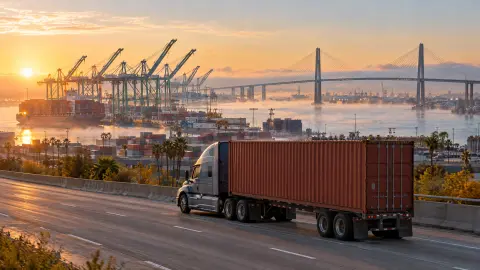
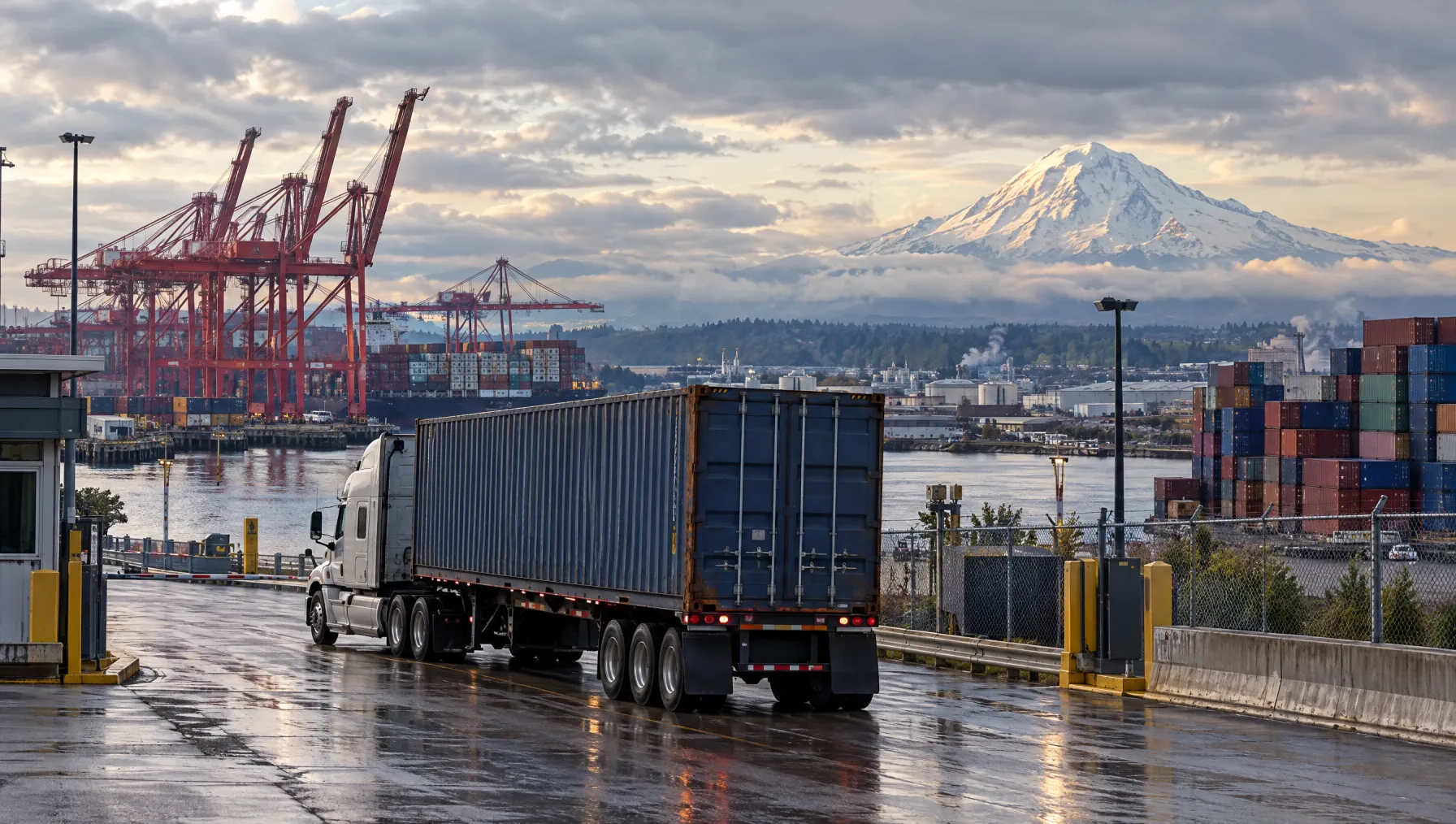
A container that comes off a ship at Terminal 18 on Harbor Island or at Husky Terminal on the Tacoma Tideflats has a short life on a truck. Most of it rides a few miles up SR 167 or I-5 to a warehouse in Kent, Auburn, Sumner or Fife, gets stripped, and comes back as an empty or an export load. That loop is the heartbeat of Puget Sound trucking. Everything else here hangs off it: the Boeing supply chain in Renton and Everett, the grain terminal on Schuster Parkway and the breakbulk yards on the Tideflats, the long lanes over Snoqualmie Pass and down I-5 to Portland.
Pay-per-driver recruiting means a carrier in this market pays us only for a driver who shows up for orientation and starts. No retainer, no monthly fee for a stack of resumes. That matters here because the hard part of recruiting in Puget Sound is not finding names. It is finding a driver who already holds a TWIC, lives within a sane commute of the valley or the Tideflats, and will say yes to the pay a carrier can actually afford on a drayage turn or a dedicated DC run. We screen for all three before a carrier ever sees the file.
In Puget Sound you are not recruiting a driver, you are recruiting a commute: if the yard is in Kent and the driver is in Everett, the deal is already dead.
Freight in Seattle: what moves, and where
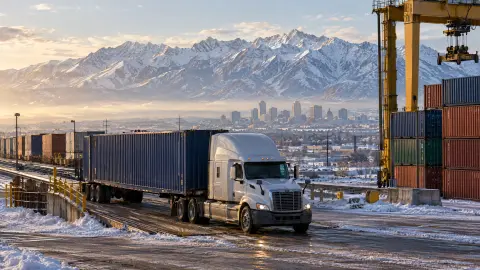
Puget Sound has two container harbors run as one gateway. The Northwest Seaport Alliance is the marine cargo operating partnership of the Port of Seattle and the Port of Tacoma, and it handled nearly $68 billion of waterborne trade with 175 trading partners in 2025. In the Seattle harbor the box terminals are Terminal 5 on West Marginal Way and Terminal 18 on Harbor Island, both operated by SSA Terminals and both with on-dock intermodal rail. Terminal 18's on-dock yard holds 25 double-stack five-pack railcars. In the Tacoma harbor the cranes line Port of Tacoma Road and the SR 509 frontage road in ZIP 98421: Husky Terminal, Washington United Terminals and Pierce County Terminal, each with its own on-dock rail yard. That is why 98421 shows up in our carrier count with 17 fleet families based right on the Tideflats. The Port of Tacoma owns nearly 2,500 acres there and licenses about two thirds of it to the alliance. The rest handles breakbulk such as John Deere tractors and Caterpillar equipment, and the port's grain terminal on Schuster Parkway exports Midwest corn and soybeans that arrive by rail.
Drayage from both harbors runs into the Kent Valley. Kent's 98032 is the densest carrier ZIP in the metro with 50 fleet families, followed by Sumner 98390 with 21, Auburn 98092 with 20 and Fife 98424 with 19. Those four ZIPs plus the Tideflats are where the region's trucks park at night. The valley is served by SR 167 on the east side and I-5 on the west. WSDOT is finishing SR 167 as six miles of new highway between Puyallup and SR 509 at the Port of Tacoma, and the expressway segment between I-5 and SR 509 is scheduled to open in mid to late 2026, which gives valley trucks a direct run to the Tacoma terminals. On the Seattle side the first mile of the tolled SR 509 expressway opened in June 2025 between I-5 and 24th Avenue South in SeaTac, with the remaining two miles due in 2028.
Outside the port loop the freight is manufacturing and distance. Boeing builds the 737 in Renton and the 767, 777 and 787 in Everett, in what Boeing describes as the largest manufacturing building in the world, and both plants pull a steady inbound stream of parts and tooling on flatbeds and dry vans. Northbound, I-5 runs to the dedicated commercial truck crossing at CBP's Blaine port of entry on the British Columbia line. Eastbound, I-90 climbs out of North Bend over Snoqualmie Pass at 3,022 feet toward Ellensburg, and from November 1 to April 1 any truck over 10,000 pounds on that stretch has to carry chains. WSDOT counts about 5,600 freight vehicles a day over the pass. Southbound it is I-5 to Portland. Of the 5,339 active carrier registrations in our Seattle, Tacoma and valley cities, 4,823 run one to nine trucks, 416 families run ten to 49, and 93 run 50 or more, so most of the equipment on these lanes belongs to small fleets working out of a leased lot in the valley.
- I-5
- The spine from the Blaine truck crossing through Everett, Seattle, Tacoma and south to Portland. WSDOT feeds real-time truck parking counts for I-5 stops to the Drivewyze and ParkerTruck apps, including the Smokey Point rest areas, the SeaTac weigh station between Fife and Federal Way and the Fort Lewis weigh station near DuPont, which matters when the Tacoma stretch eats an hour of a driver's day.
- I-90 over Snoqualmie Pass
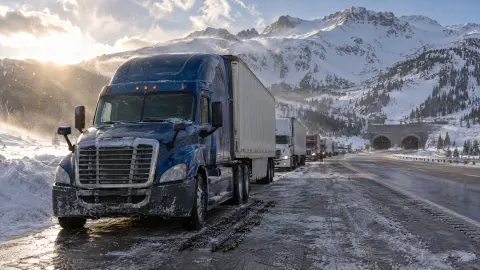
- The only interstate east out of Puget Sound, cresting at 3,022 feet with more than 450 inches of snow in an average winter. Trucks over 10,000 pounds must carry chains from North Bend to Ellensburg between November 1 and April 1, and WSDOT closes the road for avalanche control, typically 30 minutes to two hours and longer in severe conditions, which strands eastbound loads in the valley.
- SR 167 Kent Valley
- The valley's truck street from Renton through Kent, Auburn, Sumner and Puyallup, with the new expressway segment to SR 509 and the Port of Tacoma scheduled to open in mid to late 2026. Most home-daily valley drivers spend their entire shift between its exits.
- I-405
- WSDOT calls the I-405 and SR 167 corridor the only north-south highway alternative to I-5 in the Puget Sound region, running from Tukwila and Renton north through Bellevue to Lynnwood. It is how Kent Valley freight reaches the Boeing Renton plant and the Everett plant without crossing downtown Seattle.
- SR 16 Tacoma Narrows Bridge
- The bridge carries SR 16 between Gig Harbor and Tacoma, and tolls are collected only on trips headed to Tacoma: $11.25 for a five-axle truck with a Good To Go pass, $11.50 by plate and $13.25 by mail. The trip toward Gig Harbor is free, so the toll lands on the return leg of a peninsula delivery.
Where the 10-plus-truck fleets sit, by ZIP: 98032 (50), 98390 (21), 98092 (20), 98424 (19), 98421 (17).
Hiring drivers in Seattle: what we actually see
The driver pool in this market is shaped by where people can afford to live, and that is mostly south of Seattle. The drivers who answer our calls for Kent Valley and Tideflats seats live in Kent, Auburn, Federal Way, Puyallup, Lakewood and Tacoma, with a second cluster up north in Everett, Marysville and Arlington that will not cross the city to work in the valley. The first question a Puget Sound driver asks is not about pay. It is where the yard is. The second is whether the job is home daily. The third, from anyone considering a regional or OTR seat, is what the carrier does when Snoqualmie Pass closes: who pays for the layover, who buys the chains, whether dispatch will reroute through Oregon. A carrier without a clear answer loses that driver on the phone.
The seats that fill fast here are home-daily drayage with a TWIC already in the driver's wallet, hourly DC shuttle work in Kent, Sumner and Auburn, and dedicated accounts where the driver knows the start time a week ahead. The seats that fill slowly are OTR from a valley yard, flatbed into the Boeing plants without a clear pay schedule, and anything that asks a driver to report before 4 a.m. in Everett when the applicant lives in Puyallup. Night shuttle work between the terminals and the valley fills if the pay is hourly and the days off are consecutive, and it does not fill at all on a per-turn rate.
What carriers get wrong here is treating the metro as one place. A posting that says Seattle draws applicants from Marysville who will never drive to Fife. Carriers also underestimate how many applicants do not yet hold a TWIC and how long TSA says the card can take, which is why we ask about it on the first call and move TWIC holders to the front of the line for port work. And too many fleets describe drayage pay as a per-turn number without saying what a typical day pays. Drivers here compare that against the hourly DC job down the street and take the hourly job.
What drivers in Seattle are paid
BLS puts the median annual wage for heavy and tractor-trailer truck drivers in the Seattle-Tacoma-Bellevue, WA metro area at $71,240, with a mean of $71,980 (Occupational Employment and Wage Statistics, May 2025).
The BLS 2025 figures for heavy and tractor-trailer drivers in the Seattle-Tacoma-Bellevue metro put the median at $71,240 and the mean at $71,980. The two numbers sit close together, which tells you this market does not have a thin band of very high earners pulling the average up. Most of the seats here are local and regional, and pay is bunched around that median whether the driver is pulling boxes to Kent or running a dedicated DC route in Sumner.
The practical lesson for a carrier is to publish a number a driver can compare against that median in one glance. For hourly valley work that means the rate and the guaranteed hours. For drayage it means what an ordinary day of turns actually pays and how detention at the gate is handled.
For regional seats out of a valley yard it means the mileage figure plus the layover pay when the pass is shut. A posting with no number is competing against every fleet in the valley that printed one.
- $71,240
- median annual wage, Seattle-Tacoma-Bellevue metro
- $71,980
- mean annual wage, May 2025 (BLS OEWS 53-3032)
Rules that shape Seattle seats
Chains required on board from November 1 to April 1
Washington rule WAC 204-24-050 requires every vehicle over 10,000 pounds GVWR to carry sufficient tire chains from November 1 to April 1, with a minimum of two extra chains on board, on listed mountain routes including I-90 between North Bend and Ellensburg over Snoqualmie Pass, SR 410 from Enumclaw to Naches and US 2 between Index and Dryden, the Stevens Pass stretch. A valley driver who never leaves the flats still gets asked about this because so many regional runs cross the pass. source ↗
TWIC and the Clean Truck Program at the container terminals
The Northwest Seaport Alliance lists TSA TWIC requirements among its trucker requirements for the Seattle and Tacoma terminals, and states that trucks serving its container terminals must have an active RFID tag and a 2007 or newer engine or a certified equivalent emission control system under the Clean Truck Program. No TWIC, no gate. source ↗
Washington gross weight limits
RCW 46.44.041 sets the maximum at 20,000 pounds on a single axle, 34,000 pounds on each of two consecutive tandem sets, and up to 105,500 pounds gross for the longest legal axle groups. Heavier combinations than most states allow are common on grain and aggregate work here, and drivers coming from out of state need to know the table. source ↗
Washington's zero-emission truck rule applies to manufacturers, not fleets
The Department of Ecology's Advanced Clean Trucks regulation, adopted in 2021, requires manufacturers to sell rising percentages of zero-emission medium and heavy trucks in Washington. Ecology states plainly that current regulations do not place any purchasing requirements on fleets, and that it has temporarily paused portions of some vehicle emissions standards in response to federal actions that Washington and ten other states are challenging in court. A carrier hiring here does not need a zero-emission truck to put a driver to work. source ↗
FAST and CTPAT for the Blaine truck crossing
Commercial trucks bound for British Columbia use the dedicated truck crossing in CBP's Blaine port of entry, listed as open seven days a week. FAST lane privileges require that every link in the supply chain, from manufacturer to carrier to driver to importer, is CTPAT certified, so a FAST card is a carrier program as much as a driver credential. source ↗
The Seattle calendar
The calendar here is set by the mountains and the docks. Chain season runs November 1 to April 1 by rule, and that is when regional and OTR applicants out of the valley thin out, because every driver weighing an I-90 run wants to know the pass plan first. WSDOT runs avalanche control on Snoqualmie Pass all winter, and each closure holds traffic for 30 minutes to two hours in ordinary conditions.
The National Weather Service office in Seattle spends the same months on mountain snow, river flooding and dense fog, all of which slow a drayage day without stopping it. On the water side, the alliance's September 17, 2026 cargo report was headlined laden exports above the five-year average, so Tideflats and Harbor Island gates stay busy into fall. Valley DC hiring follows the retail build from late summer through December and goes quiet in January.
The easiest window to fill an OTR seat from a Kent or Fife yard is April through September, when the pass is open and a driver will take the job without a winter conversation.
How pay-per-driver works for a Seattle carrier
An intake call maps your lanes, equipment, pay and home time for Seattle; if we can't guarantee you enough driver volume, we say so on that call. Our recruiters interview every driver by phone and verify CDL, endorsements, experience and work history against your requirements, then send complete submission packets through Onboard, our own placement platform. You pay per placed driver — half when the driver starts, half after the first 14 days — and recruiting for Seattle runs from our Mundelein, IL office, 2,060 miles away. The model in full is on Pay Per Driver; why the first 48 hours decide most hires is on speed to hire.
Who this fits in Seattle — and who it doesn't
The census counts 416 operators running 10 to 49 trucks in the Seattle area and 93 with 50 or more.
This works for the 416 fleet families in the ten to 49 truck band that run a yard in Kent, Auburn, Sumner, Fife or the Tideflats and need two to six drivers a quarter without hiring a recruiter. It works for the 93 carriers at 50 trucks and up that have dedicated accounts in the valley or at Sea-Tac and want a second pipeline alongside their own ads. It works for drayage outfits that pay W-2 or guarantee a daily minimum, for hourly shuttle operations between the terminals and the DCs, for flatbed carriers feeding the Boeing plants with a published pay schedule, and for regional fleets running I-90 with a written chain and layover policy.
Among the 4,823 one to nine truck carriers, it fits the ones with a real lot, a real start time and one or two seats a year.
Who we turn down: We turn down carriers that want a driver to live in Seattle proper for a yard in Fife, because that commute does not survive the first month. We turn down drayage programs that pay per turn with no detention pay and no daily floor, since the driver will leave for the hourly job in Kent within sixty days and we will have worked for nothing. We turn down fleets that want port drivers but do not have Clean Truck Program compliant tractors with RFID tags, and regional carriers that cannot tell us what happens when Snoqualmie closes. We also pass on lease-purchase-only programs dressed up as driver jobs.
How we think about drivers who stay: why drivers quit, and how to fix each reason. Selling to trucking companies rather than hiring drivers? That's a different service — Marketing for Trucking.
Our numbers
No third party audited these. They're our own operating numbers — the claims we make publicly about our own shop, and the standard you should hold us to on a call.
- 100+
- drivers our operation places per month
- 3,000+
- lifetime CDL hires
- 50+
- carrier partners
- 24 hrs
- to first drivers for a new carrier
More carrier feedback, in the carriers' own words: results.
Questions Seattle carriers ask us
Staffing and recruiting are not the same purchase — ask any agency these, then compare who does the work and when the money changes hands.
What does CDL Agency charge a Kent Valley or Tacoma carrier to fill a seat?
One flat fee per driver we place, and nothing before that. We quote the fee up front based on the seat, whether that is a TWIC-holding drayage driver running Husky Terminal to Auburn or a regional driver crossing I-90 from a Fife yard. You pay half when the driver starts and the other half after a guarantee period we agree on in writing. There is no retainer and no charge for candidates you interview and decline. If the driver quits inside the guarantee window we replace the seat or refund the balance, and we tell you which before you sign.
Do you have recruiters in Seattle or Tacoma, or anywhere in Washington?
No. We have no office, yard or staff in Washington. Our nearest office is our headquarters at 1280 Townline Road in Mundelein, Illinois, about 2,060 miles from Seattle, and our other offices are in Romeoville, Illinois, Lancaster, Texas and North Miami, Florida. Every Puget Sound seat we work is recruited by phone, text and video from those offices. We will not be at your Kent yard on Tuesday, but the recruiter on your account will know your start times, your terminal appointment windows and your pass policy well enough to explain them to a driver in Puyallup before you ever meet.
My trucks run Husky Terminal to Kent and a few loads a week up I-5 to Blaine. What does a driver need in hand on day one?
For the terminals, a valid TWIC card. The Northwest Seaport Alliance lists TSA TWIC requirements for truckers at the Seattle and Tacoma container terminals, and TSA says a new card costs $124, lasts five years and should be applied for at least 60 days out because processing can run past 45 days. The truck needs an active RFID tag and a Clean Truck Program compliant engine, and the alliance publishes a trucker onboard list for the carriers serving its terminals. For the Blaine truck crossing, CBP accepts a passport, passport card, enhanced driver's license or a FAST card for a U.S. citizen returning by land, and the FAST lane itself requires CTPAT certification for every link in the chain, from the carrier to the driver to the importer. We confirm TWIC status on our first call.
Is it easier to fill a night shuttle between the Tideflats and a Sumner DC, or an over-the-road seat out of a Fife yard?
The night shuttle, as long as it is hourly. Drivers in Tacoma, Lakewood and Puyallup will take a Tideflats to Sumner shuttle on nights if the rate is posted, the hours are guaranteed and the days off are consecutive. The same shuttle on a per-turn rate sits open for weeks. The OTR seat is harder for a different reason: a driver sleeping in the truck can live anywhere, so you are competing with every national carrier that has a Washington terminal, and from November on you are also answering the Snoqualmie question. Dedicated DC work with a known weekly schedule fills faster than either.
Which endorsements do Puget Sound carriers actually need, and how do you screen for TWIC, hazmat, tanker and doubles?
For port and valley work the credential that matters is TWIC, which is a TSA card rather than a CDL endorsement, and we verify it by asking for the card's expiration date on the first call. Washington issues the standard H, N, T and X endorsements, and hazmat requires a TSA security threat assessment that costs $85.25. TSA lists Washington among the states that accept a valid TWIC for the reduced $41 rate, which saves a port driver adding hazmat real money. Tanker shows up on fuel and chemical hauls and doubles on LTL linehaul over I-90. We ask every candidate to read the endorsements off their Washington license on video, we check the medical card date, and we do not send a carrier a candidate whose endorsement is still pending.
A driver lives in Federal Way or Puyallup. How do the drug test, Clearinghouse query and paperwork happen before orientation at a Kent yard?
FMCSA requires a full pre-employment query in the Drug and Alcohol Clearinghouse before a driver can be hired for a safety-sensitive job, and the driver has to give specific electronic consent inside the Clearinghouse for every full query. We get that consent and run the query before we send the file, so a carrier never spends time on a candidate with a prohibited status. The carrier's own consortium orders the DOT pre-employment drug screen and we route the driver to a collection site near home in Federal Way, Puyallup or Tacoma rather than making them drive to the yard twice. Employment verification, the Washington driving record, the medical card and the road test schedule all move through us in the days before orientation. The goal is that the driver's first trip to Kent is orientation itself, with every form already signed.
Drivers in Seattle: browse current CDL-A jobs or get matched to a carrier — free for drivers.
Sources
- Northwest Seaport Alliance, About Us
- Northwest Seaport Alliance, Cargo Statistics (2025 trade value, September 2026 export report)
- Northwest Seaport Alliance, Terminals (TWIC, Clean Truck Program, trucker onboard list)
- NWSA Terminal 5, Seattle Harbor
- NWSA Terminal 18, Seattle Harbor
- NWSA Terminal 18 Update (Harbor Island gate notices)
- NWSA Husky Terminal, Tacoma Harbor
- NWSA Washington United Terminals, Tacoma Harbor
- NWSA Pierce County Terminal, Tacoma Harbor
- Port of Tacoma, About
- WAC 204-24-050, tire chain requirements for vehicles over 10,000 lbs
- RCW 46.44.041, maximum gross weights
- WSDOT Puget Sound Gateway Program (SR 167 and SR 509 completion)
- WSDOT I-405/SR 167 Corridor Program
- WSDOT Tacoma Narrows Bridge tolling
- WSDOT truck parking at rest areas and I-5 parking availability tool
- WSDOT avalanche control (Snoqualmie Pass elevation, snowfall, freight volume, closures)
- Boeing Everett production facility
- Boeing Renton production facility
- CBP Blaine, WA port of entry
- CBP FAST program
- CBP Western Hemisphere Travel Initiative (land border documents)
- TSA Transportation Worker Identification Credential
- TSA Hazardous Materials Endorsement Threat Assessment
- Washington DOL CDL endorsements and restrictions
- Washington Department of Ecology, medium- and heavy-duty vehicle standards (Advanced Clean Trucks)
- Washington Department of Ecology, zero-emission vehicle standards overview
- National Weather Service Seattle/Tacoma
- FMCSA Drug and Alcohol Clearinghouse, queries and consent FAQ
1 FMCSA Company Census (2026-09-26): active carriers based in Seattle, Tacoma, Kent, Auburn, Sumner, Fife, Puyallup, Federal Way, Tukwila, SeaTac, Renton, Everett, Marysville, Arlington, Lakewood, DuPont, Fircrest, Pacific, Algona; MCS-150 filed in the last 24 months; 1–20,000 trucks; fewer than 10 buses. 10+ truck counts merge registrations sharing an address or D-U-N-S number. Totals and the 1–9 band count active USDOT registrations; fleet sizes are self-reported on the MCS-150, so read them as a scale, not a headcount.
Wages: U.S. Bureau of Labor Statistics, OEWS May 2025, occupation 53-3032, series OEUM004266000000053303213 (median) and OEUM004266000000053303204 (mean).
Written by
Andrius Pletniovas — Founder, CDL Agency
Andrius Pletniovas (Andrius Digital) is the founder of CDL Agency, a truck-driver recruiting and marketing company that has placed 3,000+ CDL drivers for 50+ carriers across the U.S. He writes about driver recruiting, retention, and the trucking market from running the agency every day.
More about Andrius →Official personal website →